
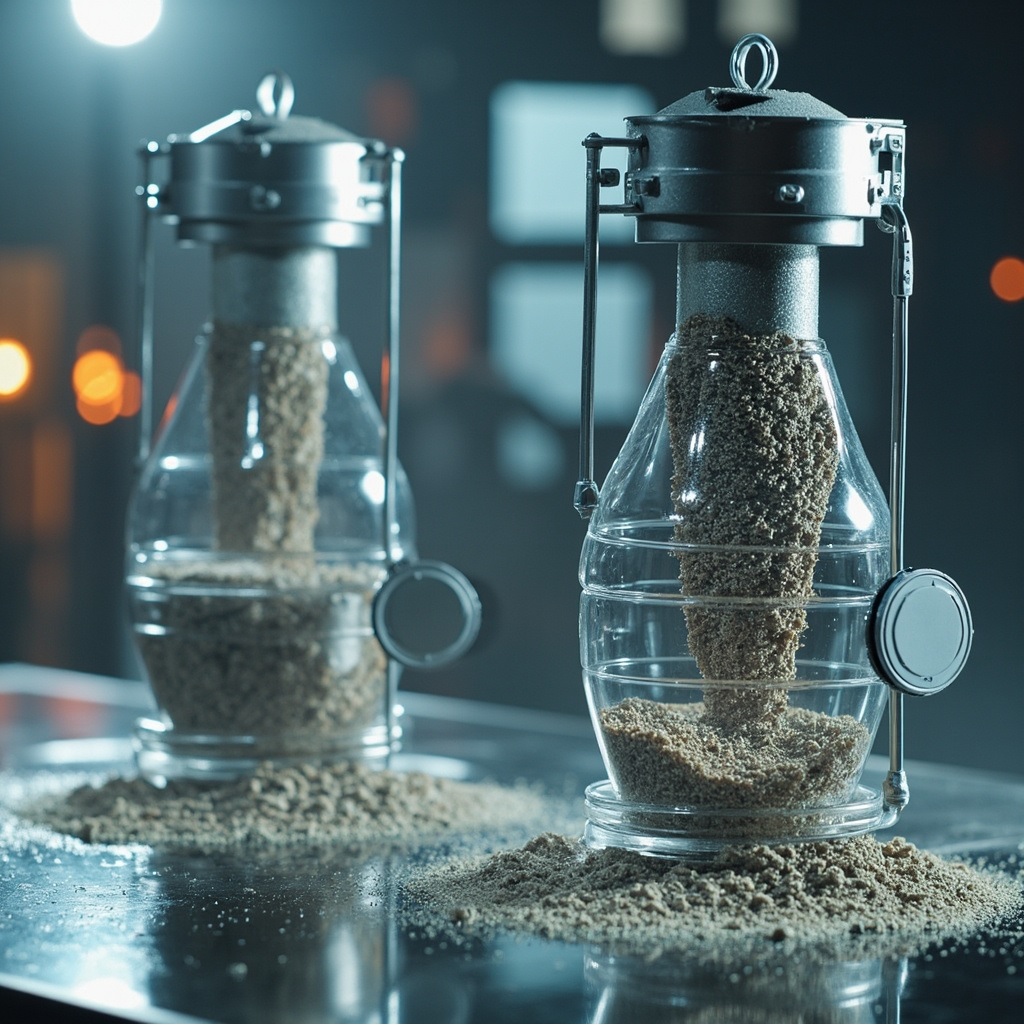
 You can watch a planetary mixer spin for ten minutes and still pull a clump of dry powder from the bottom of the bowl. That moment—when the operator scrapes the sides, frowns, and dumps it back in for another cycle—is the exact reason the intensive mixer exists. Homogeneity isn’t a luxury in industrial mixing; it’s the line between a batch that passes QC and one that gets rejected at a client’s loading dock. So which machine actually delivers that elusive 100% mark? Let’s stop pretending both are equal and look at the physics.
The planetary mixer works like a slow, deliberate dancer. Its blade orbits the bowl while rotating on its own axis, covering the surface area methodically. It’s great for gentle folding, for batters, for doughs that need aeration. But here’s the catch: planetary mixers rely on the operator to scrape the walls and the bottom. Without that manual intervention, material near the center axis and along the bowl perimeter stays untouched. You get a gradient of mixing intensity—high in the blade path, low everywhere else. For a batch of refractory mortar or a dense rubber compound, that gradient means dead zones. And dead zones mean heterogeneity.
Now look at the intensive mixer. The design is fundamentally different: a high-speed rotor inside a stationary drum, often with a counter-rotating pan or a set of fixed scrapers. The material isn’t just stirred; it’s sheared, compressed, and thrown against itself. Every particle gets forced through a high-energy zone multiple times per second. There is no “bottom of the bowl” problem because the entire mass is in constant, violent motion. The intensive mixer doesn’t ask the operator to scrape; it scrapes itself, continuously.
But does that guarantee 100% homogeneity? Not automatically. The intensive mixer’s strength is also its weakness. If the rotor speed is too high, you can over-shear the material, generating heat or breaking down particle structure. If the batch size is too large relative to the drum volume, the material just slides around without proper energy transfer. The trick is matching the mixer to the material’s rheology. For a dry mix with a wide particle size distribution—say, a cementitious grout with fibers and aggregates—the intensive mixer wins hands down. The planetary mixer would leave the fibers clumped and the coarse aggregates segregated at the bottom.
Here’s where the marketing talk usually stops and the real decision starts. If your recipe requires 100% homogeneity down to the microscopic level—think catalyst dispersion in a chemical paste or pigment distribution in a silicone compound—the intensive mixer is the only realistic choice. But if your material is shear-sensitive, like a mousse or a cream with delicate air cells, the planetary mixer’s gentler action preserves structure while still achieving acceptable uniformity.
One brand that has quietly solved the compromise is REFAMIX. Their intensive mixers incorporate a variable-speed rotor and a self-adjusting scraper system that mimics the planetary mixer’s wall coverage but at much higher energy levels. Operators report that a REFAMIX unit can achieve in three minutes what a planetary mixer needs twenty minutes and three manual scrapes to approach. That’s not just speed; that’s consistency. When you eliminate the human variable, homogeneity becomes a machine parameter, not a skill.
So which delivers better 100% homogeneity? The honest answer: it depends on what “100%” means to your process. If you can tolerate a 2-3% variation in moisture or particle distribution, a well-maintained planetary mixer with a diligent operator might suffice. But if your spec sheet demands zero variance, if a single unmixed speck means a rejected batch, then the intensive mixer is not a preference—it’s a requirement. The planetary mixer stirs; the intensive mixer forces. And force, when applied correctly, leaves no room for error.

